
Dealing with student behaviors can be extremely frustrating. It’s challenging, it’s exhausting, and sometimes it feels like you’re never going to get out of it. That’s where the easiest and most effective behavior strategy you’ll ever use comes in. Now, don’t get upset with me when I tell you that it’s some thing you’re probably already doing and I don’t have any newfangled tool for you.
But consider that maybe you’re just not putting in as much effort to this strategy as you could be. The strategy takes energy every single day and it can be difficult to continue on when dealing with behaviors. However, it is, and always will be, the most effective strategy that you can use.
It’s simple, it’s effective, and it’s free.
If you guessed relationship building, you’re right. Building relationships with your students is the most effective thing that you can do to promote and maintain positive behaviors in your classroom and beyond. I have worked with so many students, and tried to act like the tough teacher who knew more and tried to get my students to listen to me by exhibiting what I call “old school teacher behavior.” Old school teacher behavior might include things like raising your voice, giving ultimatums, or taking away things constantly. However, when I started to shift my behavior management and have more fun with them, get more personable with them, and share about my own life, I started to see changes. I saw changes in the day to day behavior, an improvement in their engagement in lessons, and in the overall morale of our classroom. Students WANTED to come to my classroom to work, and often times would beg to stay longer to continue to practice skills. I didn’t implement any new strategies, I didn’t buy any new tools, and I didn’t take a course. All I did was break down the wall between teacher and student just enough to build a positive relationship with them. This doesn’t mean that I had fewer expectations, or that I let them get away with things, it simply means that I showed them trust and respect in a way that I would want to be trusted and respected, and I gave them choice and purpose in what we were doing every single day.
I’ve been teaching now for nine years, and I’ve helped a lot of teachers build positive relationships with their students, too. It sometimes takes seeing students in a different way, especially the students who may be giving you a little bit harder of a time on a day-to-day basis. However, as we well know, those are the students who need our grace and love even more. These are the students who need strong relationships, who need our trust, and who need to be able to make choices and have purpose in what they are doing. If we can’t take a step back and allow them some of that space and allow the ability to buy in to what we are doing, we can’t expect them to respect us enough to do what we are asking of them.
As I think about elementary and high school students across the spectrum, it rings, true. Students with various abilities all want to be treated with respect, be trusted, and feel that they have a purpose in your classroom. When we do this, we aren’t going to get rid of behaviors altogether, but we are going to create an environment where it’s acceptable to express ourselves, it’s a safe space to talk about what’s going on in our lives, and it’s a safe space for the child to overcome what is bothering them with your support and guidance to work through it. Even when there are behaviors, I nine times out of 10 get an apology from the student without needing to prompt them to do so. They want to do the right thing to maintain the positive relationship with me, and I am receiving those apologies, talking through with them, what we can do next time and assuring them that it’s OK to get upset and feel our feelings.
If you’re looking for tools to help students take ownership of their behavior and self-reflect, my FREE STUDENT GOAL SETTING GUIDE might be a good place to start. Once you implement goal setting and give students ownership (and accountability) for their day to day life in the classroom, you create intrinsic motivation.
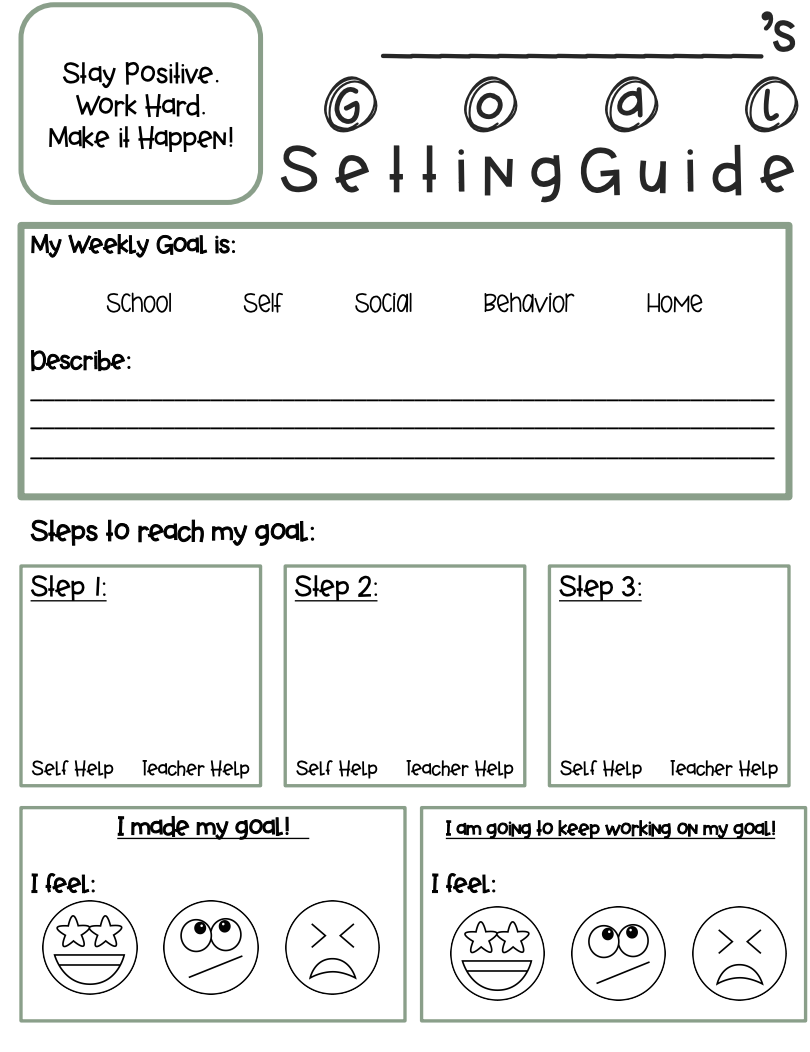
These self-monitoring and self-reflection sheets are another great tool that can be implemented in any environment. Check ins make a world of difference in the lives of kids. Showing up every day and making even the smallest effort can make a world of difference.
This looks like saying good morning, using their name, asking about their weekend, knowing things about their lives outside of school, showing up for an extracurricular activity, sharing about YOUR life outside of school, having lunch with them, sharing a snack, going on a walk, giving them a compliment (even when it feels extra hard), calling home with good news, using them as a positive example, trusting them with a new task, telling them you trust them…and the list goes on and on. These LITTLE pieces of effort can make a HUGE impact in the response you get from your children.
Love them well.
Teala
 Live Rooted